Fjordlines
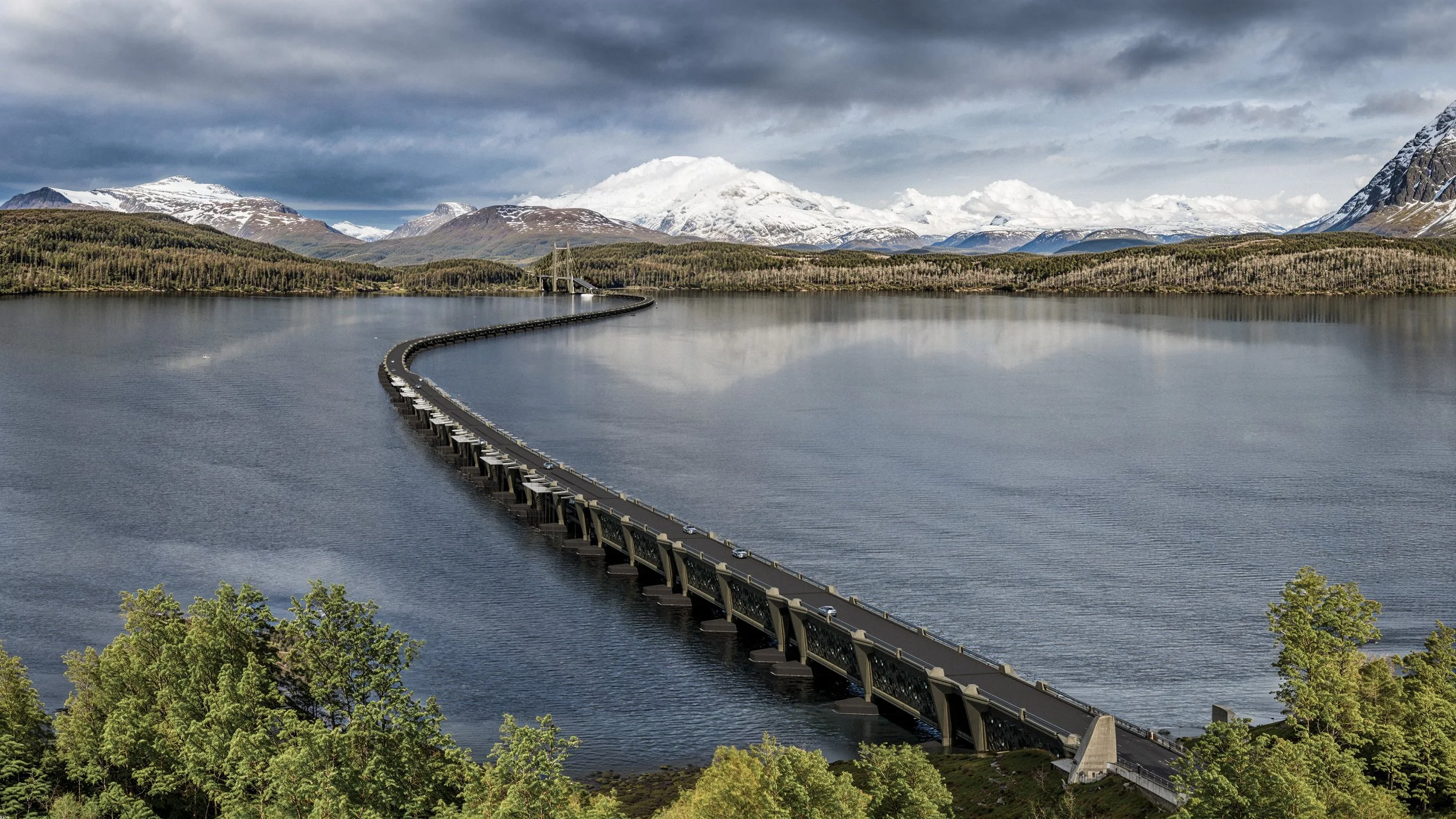
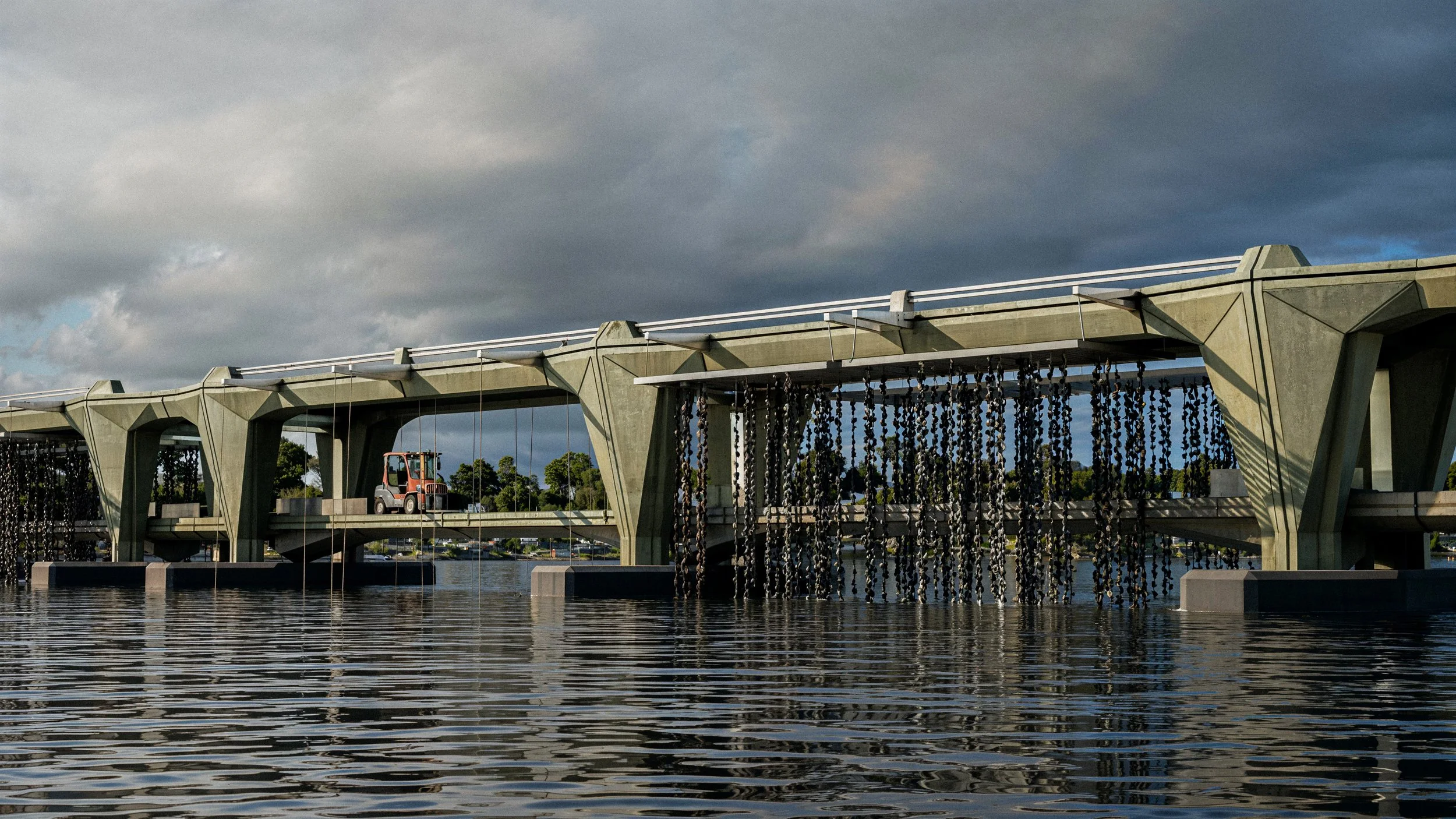
Fjordlines is a research project exploring how locally farmed mussel shells can become a building material for floating bridge infrastructure. The proposal connects remote island communities while integrating marine farming, material production, and architecture into one continuous system.
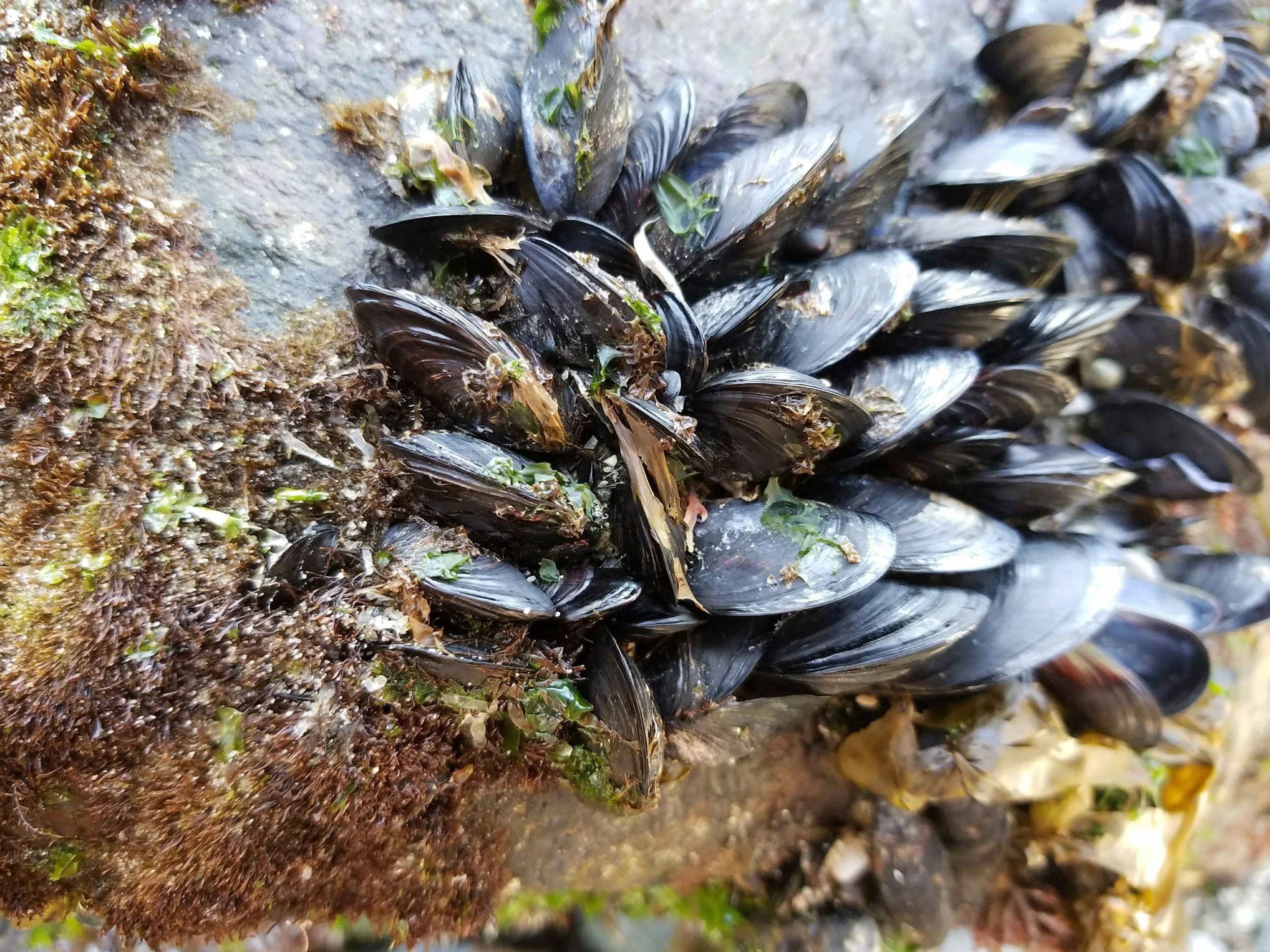
Instead of seeing mussel shells as waste from food production, we approach them as a resource. Mussel shells are composed primarily of calcium carbonate, a material widely used in glass, ceramics, mortar, and concrete. What is normally discarded becomes the foundation for new construction.
From Shell to Structural Panel
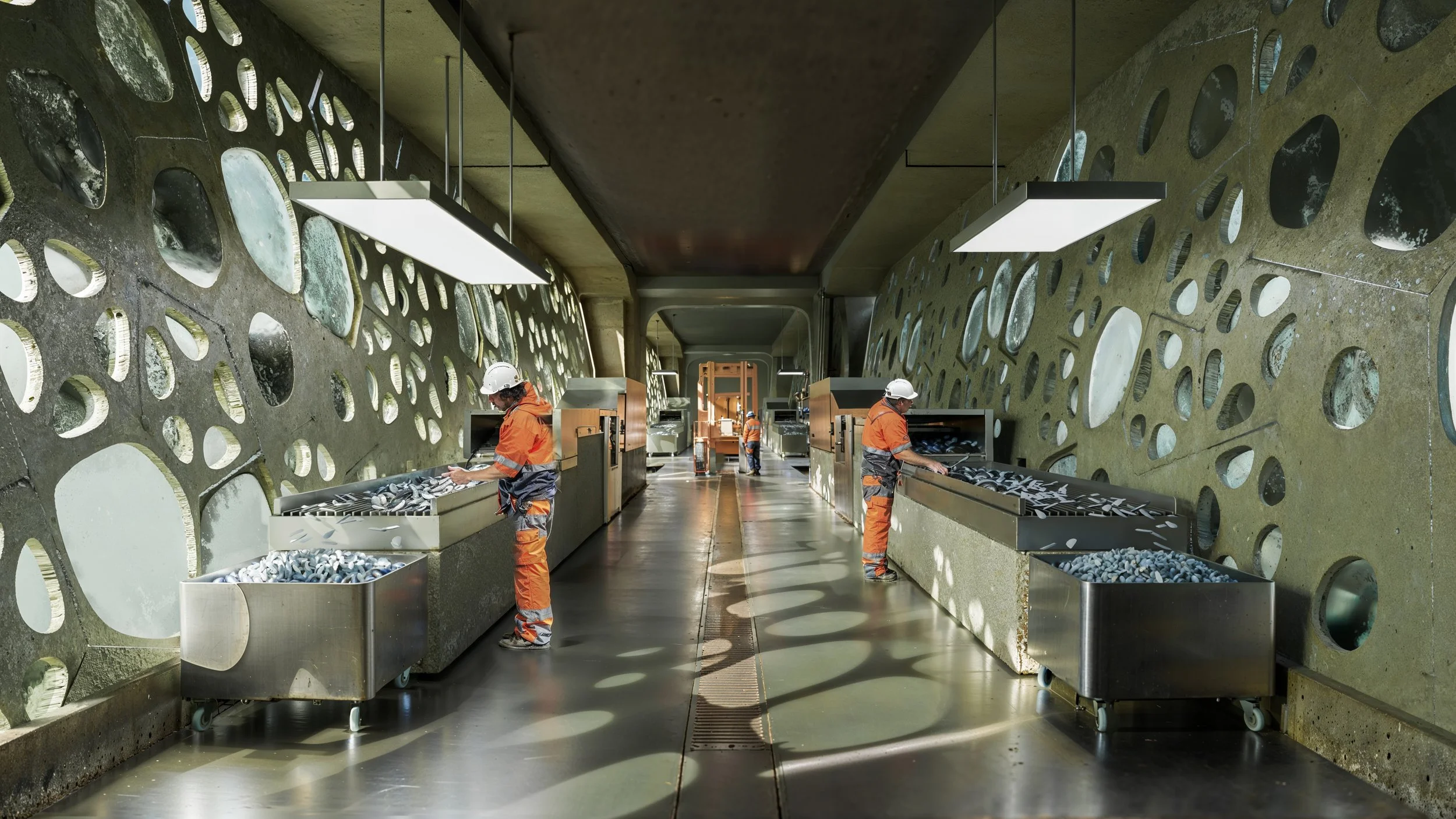
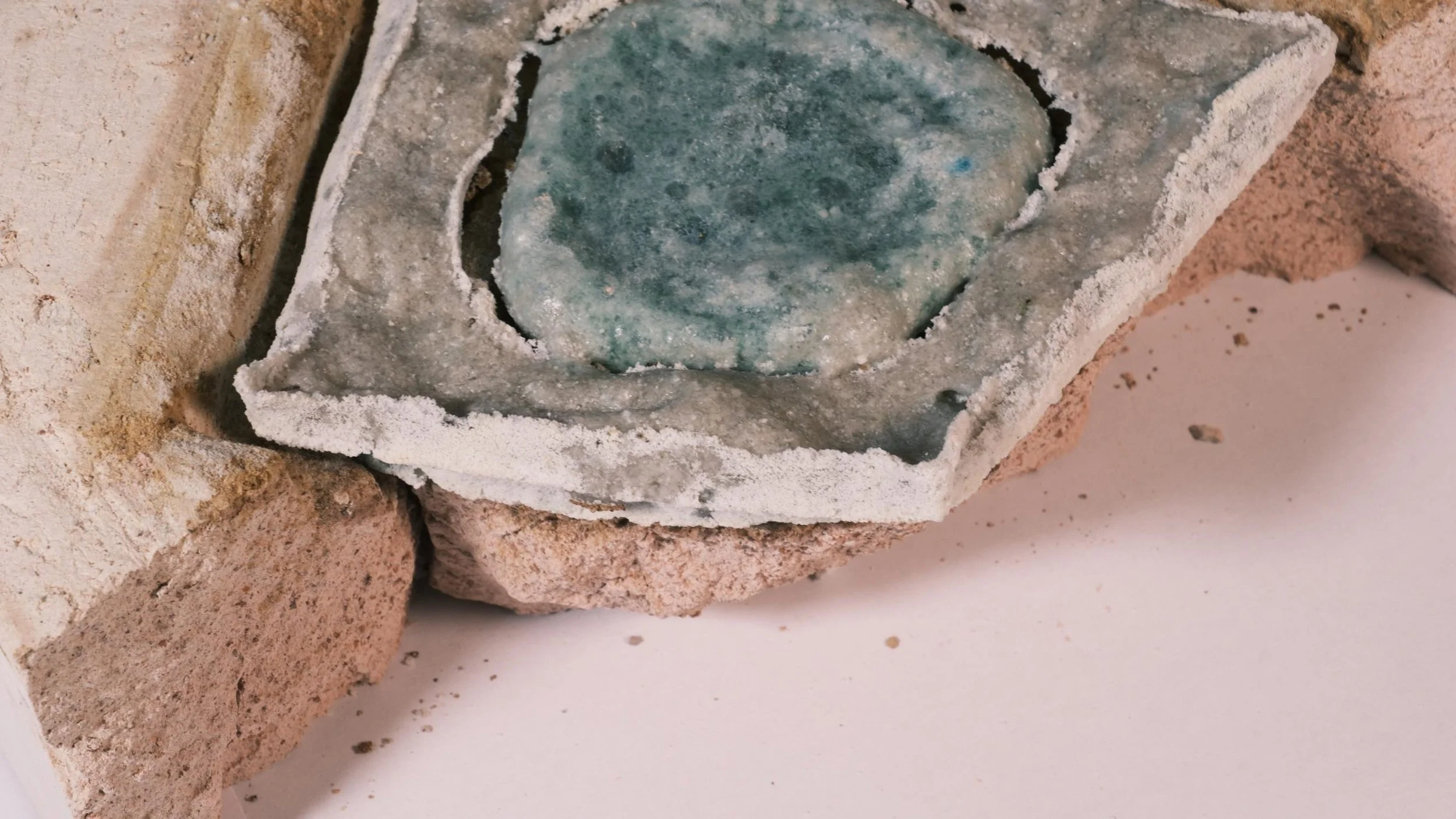
Blue mussels are farmed extensively along European coastlines, particularly in Norway. After harvest, large quantities of shells remain unused. These shells are cleaned, crushed, and processed into calcium carbonate powder. The powder is then combined with sand, recycled glass, and soda ash and fired at high temperatures to produce a durable ceramic based material.
The final material composition consists of
30 percent recycled glass
30 percent sand
25 percent calcium carbonate from mussel shells
15 percent soda ash
Fired at 1200 degrees Celsius, the mixture forms strong panels suitable for architectural application. The panels are designed with different openings and structural variations, allowing them to perform both technically and spatially within the bridge system.

A Productive Bridge
The bridge is conceived as more than a crossing. It becomes a productive landscape that supports mussel farming alongside infrastructure. Farming areas extend parallel to the bridge, supplying the biomass required for panel production.
For the full bridge, approximately 978 tons of mussel biomass are required. With an average yield of 4 kilograms per square meter, the farming area is dimensioned to supply enough material within one year. In this way, material sourcing and construction remain directly connected to place.
Marine Ecology and Architecture
Mussel farming contributes positively to marine environments. Mussels filter water, remove excess nutrients, and create habitats for marine life. The project builds on these ecological qualities and extends them into the built environment.
By transforming marine biomass into long lasting construction elements, Fjordlines challenges the assumption that biological materials lack durability. The project demonstrates that locally sourced biomass can perform structurally and aesthetically in complex infrastructure.
Research Focus
The central question guiding the project is how building elements made from locally farmed mussel shells can be integrated into a floating bridge design that supports remote infrastructure.
Fjordlines responds by linking farming, fabrication, and architecture into a circular system rooted in its coastal context.